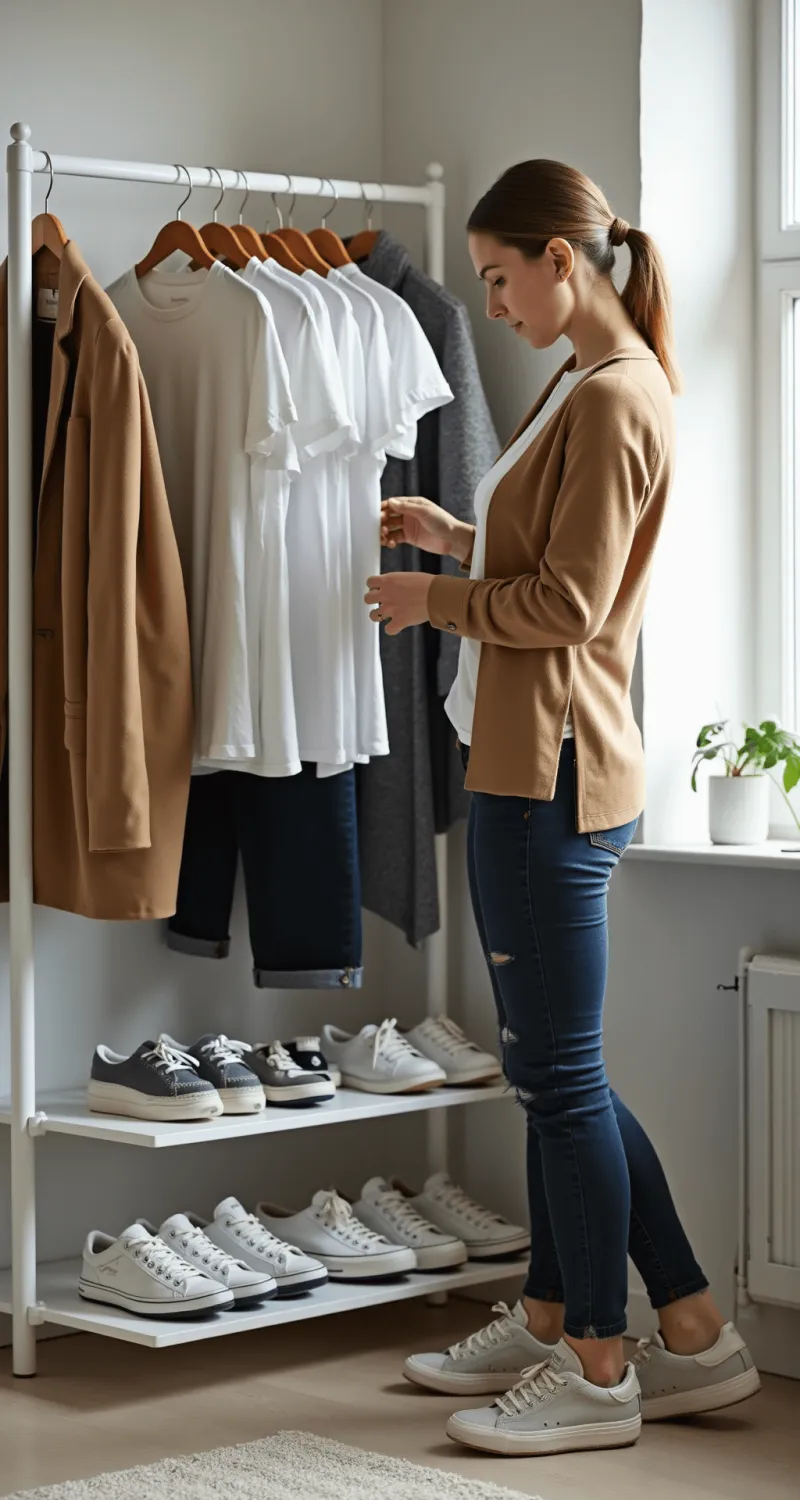
Your Closet, Your Rules: Building a Capsule Wardrobe That Actually Feels Like You
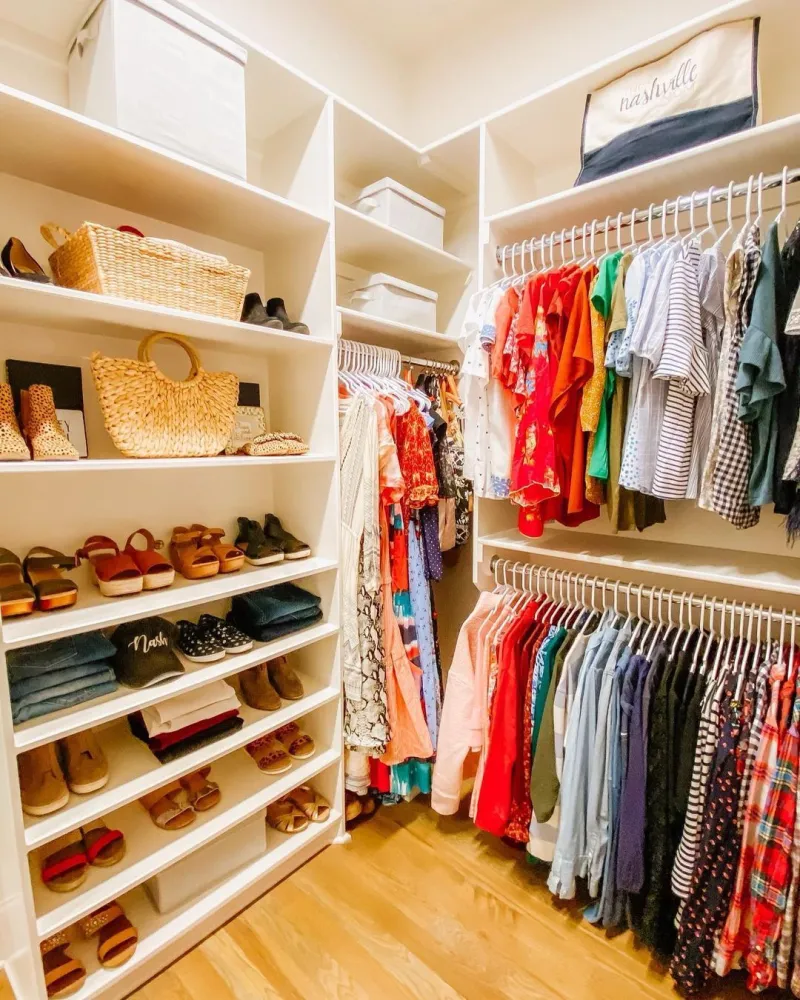
Photo: woman organizing colorful wardrobe closet with intention, via i.pinimg.com
Somewhere along the way, the idea of a capsule wardrobe got hijacked. What started as a genuinely liberating concept—owning fewer, better things—turned into a Pinterest board full of neutral linen sets and the quiet pressure to look like you shop exclusively at Scandinavian design studios. If that's your vibe, amazing. But if it's not? You've probably scrolled past the whole idea and gone back to buying whatever catches your eye on sale.
Here's the thing: a thoughtful wardrobe doesn't have to erase your personality. It just has to work for you. That's the whole point of shopping with intention—you end up with pieces that genuinely earn their space, instead of a closet full of stuff that technically fits but never quite feels right.
Let's walk through how to actually do this, without starting from scratch or abandoning everything that makes you you.
Start with What You Already Own (Seriously)
Before you buy a single thing, take stock of what's already hanging in your closet. Not to shame yourself—to get honest. Pull everything out. Yes, everything. Lay it on your bed, toss it on the floor, whatever works. Then ask yourself three questions about each item:
- Do I actually wear this? Not "could I wear this" or "I'll wear this someday." Do you reach for it?
- Does it make me feel good when I put it on? Comfort matters. Confidence matters.
- Does it work with at least three other things I own? Versatility is the secret ingredient here.
Anything that fails all three tests? That's your starting donation pile. Anything that passes at least two? Keep it in the conversation. What you'll likely find is that you already own more of a working wardrobe than you realized—it's just buried under the impulse buys and the "maybe one day" pieces.
Stop Chasing Basics. Find Your Basics.
The word "basics" gets thrown around like it means the same thing for everyone. It doesn't. A classic white button-down is a basic for some people. For others, it's a bold graphic tee or a perfectly worn-in denim jacket. The point isn't to build the same foundation as everyone else—it's to identify the items that you return to again and again.
Think about your actual lifestyle. Where do you go most days? What do you do on weekends? Are you dressing for an office, a studio, a classroom, a coffee shop, or some combination of all of the above? Your real basics are the pieces that show up across all of those scenarios and still feel right.
Once you know what those are for you specifically, then you can invest in quality versions of them. A well-made item in a cut and fabric that suits you will outlast three mediocre versions of the same thing. That's not just a style argument—it's a practical one. Quality costs more upfront and less over time.
Give Personality Pieces a Real Role
Here's where a lot of capsule wardrobe advice goes sideways: it treats anything expressive or colorful like a threat to the system. But personality pieces aren't the problem. Impulse buys with no purpose are the problem.
There's a difference between a vintage-inspired floral dress that you've loved for three years and reach for every chance you get, and a sequined top you bought for one party and haven't touched since. One belongs in your wardrobe. The other doesn't—regardless of how either one looks.
When you're adding something expressive or statement-making, just ask yourself: does this fit into the life I'm actually living? Does it work with things I already own? Is this something I genuinely love, or am I just responding to a trend?
If the answer is "I genuinely love this and I'll actually wear it," then it belongs. Full stop. A capsule wardrobe isn't a uniform. It's a collection of things that all earn their keep—and some of those things are going to be bold, bright, or completely unexpected. That's not a flaw in the system. That's the system working.
The Pressure to Be Minimal Isn't Serving You
Let's be direct about something: minimalism as an aesthetic is a choice, not a virtue. Owning 33 items doesn't make you a better person. Owning 80 items that you love, use, and care for is just as intentional—maybe more so.
The goal of building a thoughtful wardrobe is to stop mindlessly accumulating and start making deliberate choices. That's it. If deliberate choices lead you to a colorful, layered, maximalist closet that reflects exactly who you are? That's a win. If they lead you to a pared-down, neutral wardrobe that feels calm and clean? Also a win.
The only version that isn't a win is the one where you're dressing for an idea of yourself that doesn't actually match your life.
Shopping Forward: How to Add Without Undoing Your Work
Once you've done the honest audit and identified your real gaps, you're ready to shop—but with a different mindset than before. Instead of browsing until something catches your eye, you're shopping with a list. Not a rigid, joyless list, but a purposeful one.
Look for pieces made to last. Pay attention to fabric, construction, and the reputation of who's making it. At Mercie's Shop, we spend a lot of time vetting what we carry specifically because we believe the things you invite into your wardrobe should be worth keeping. Independent makers and small-batch producers often put out work that big retailers simply can't match—both in quality and in the care that goes into each piece.
And when something new comes in, try the one-in-one-out approach. It keeps the closet from creeping back into chaos without requiring you to live like a monk.
The Bigger Picture
Building a wardrobe with intention is, at its core, an act of self-respect. It says: I know who I am, I know what I need, and I'm not going to spend money or energy on things that don't serve me. That's not restrictive—it's actually pretty freeing.
You don't have to overhaul everything overnight. Start with one honest pass through your closet. Identify one or two real gaps. Fill them thoughtfully. Repeat the process when it feels right.
Your wardrobe should feel like you—not like a mood board, not like a trend report, and definitely not like someone else's idea of who you should be. Take it one step at a time, and give yourself some grace along the way. That's the whole spirit of shopping with mercy.